


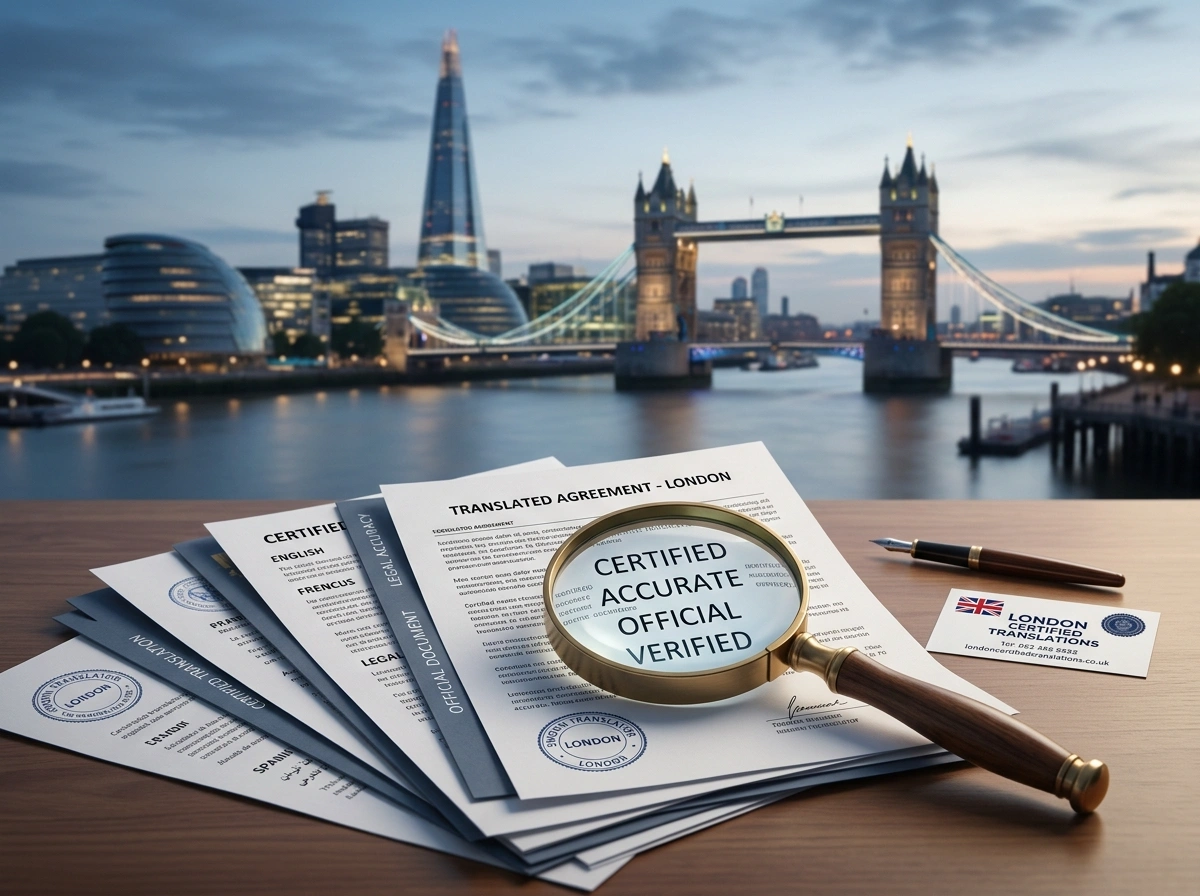
London stands out as one of the most linguistically diverse cities on the planet. With over 100 languages spoken across its 32 boroughs and more than 2.2 million residents born outside the UK, the city is a vibrant hub of international cultures and global business. This extraordinary diversity brings a constant need for clear communication, especially when it comes to official paperwork. Navigating the bureaucracy of immigration, education, or the legal system often requires translating vital documents from a foreign language into English.
If you are applying for a visa, enrolling in a university, or presenting evidence in court, you cannot simply translate your documents yourself. UK authorities require an official guarantee that the translated text is completely accurate and faithful to the original. A poorly translated document can lead to severe delays, application rejections, or even legal complications. You need a professional service that understands the exact specifications demanded by local institutions.
Finding the right provider can feel overwhelming given the sheer number of options available across the capital. You have to navigate varying prices, turnaround times, and qualification standards. This guide will walk you through exactly what you need to look for when selecting a provider, ensuring your documents are accepted without hesitation by the Home Office, universities, or the courts.
Understanding What Certified Translation Is
A certified translation is far more than a simple word-for-word conversion of text. In the United Kingdom, it involves a formal declaration by a professional translator or translation agency confirming that the translated document is a true and accurate representation of the original.
Unlike some European countries, the UK does not have a system of “sworn translators.” Instead, institutions rely on specific formatting and certification rules. For a document to be officially accepted by government bodies, it must be accompanied by a signed statement of truth. This statement needs to include the date of the translation, the translator’s or agency’s full credentials, and their contact details.
When searching for reliable certified translation services london, you must ensure the provider strictly adheres to these rules. If an agency fails to provide the proper signed certification or leaves out crucial contact information, the receiving authority will likely reject the document outright. Knowing these requirements upfront saves you from wasting time and money on a service that does not meet official UK standards.
Why You Need Professional Translation in London
Different institutions across the city maintain strict guidelines regarding the documents they accept. Attempting to use an uncertified or amateur translation will almost certainly result in your submission being denied. Here are the primary reasons London residents and businesses require professional assistance.
UK Visas and Immigration (UKVI) Applications
The UK Home Office has incredibly rigorous standards for all documents submitted in support of visa and immigration applications. Whether you are applying for a spouse visa, seeking Indefinite Leave to Remain, or renewing your current immigration status, any supporting evidence not in English or Welsh must be accompanied by a certified translation. This includes birth certificates, marriage certificates, police records, and financial bank statements. A professional agency knows exactly how to format these translations to ensure UKVI compliance.
University Admissions
London is home to some of the world’s most prestigious academic institutions, including University College London (UCL), Imperial College, the London School of Economics (LSE), and King’s College London. These universities attract thousands of international students every year. To process admissions, admissions offices require certified translations of overseas academic transcripts, degree certificates, and diplomas. Professional translators ensure that your educational qualifications are accurately represented, giving you the best chance of acceptance.
Legal and Court Proceedings
The legal sector frequently relies on certified translations. Courts and tribunals across the capital, from the Royal Courts of Justice to the Old Bailey and various immigration tribunals, require certified translations for any foreign-language evidence. This includes witness statements, employment contracts, divorce decrees, and power of attorney documents. In the legal realm, a single mistranslated word can change the entire meaning of a contract or statement.
Key Factors to Consider When Choosing a Service
Selecting a translation provider requires careful evaluation. You want an agency that combines linguistic fluency with a deep understanding of UK bureaucratic requirements.
First, verify that the agency’s translations are accepted by the specific institution you are dealing with. A reputable agency will state clearly if their documents meet Home Office, UKVI, or HM Courts & Tribunals Service standards.
Second, check their language capabilities. London’s top languages include Polish, Bengali, Arabic, Urdu, Turkish, and Romanian. A comprehensive service should have native-level professional translators for these major languages, as well as the capacity to handle less common dialects.
Finally, consider their data security policies. You will be handing over highly sensitive personal information, such as your passport details, medical records, or financial history. Look for agencies that offer secure upload portals and have strict confidentiality agreements in place to protect your data.
The Importance of Industry-Specific Expertise
Language fluency alone does not qualify someone to translate complex official documents. The best translation services employ professionals with subject-matter expertise in specific industries.
Legal documents, for instance, contain precise terminology that does not always have a direct equivalent in English. A translator working on a court judgment or an employment contract must understand the legal systems of both the source and target countries. They must convey the exact legal intent without adding ambiguity.
Similarly, medical records require a translator familiar with healthcare terminology to accurately translate diagnoses, treatment plans, and pharmaceutical names. Academic translators must know how to accurately describe foreign grading systems and course modules so that UK university admissions officers can properly evaluate a student’s qualifications. Always ask your prospective agency if they assign documents to translators with relevant industry experience.
Comparing Pricing and Turnaround Times
Cost is always a practical consideration, but it should never be the only factor driving your decision. Unusually cheap services often cut corners, either by using machine translation without human review or by providing inadequate certification that fails official scrutiny.
As a benchmark, professional certified translations in the UK typically start from around £29.95 per page. This fee usually covers the translation itself, the quality assurance check, and the required signed certification. Be wary of hidden fees, and always ask for a full, transparent quote before committing.
Turnaround times are equally important, especially if you are working against a tight visa deadline or a looming court date. Standard turnaround for most personal documents is usually one to three business days. Many top-tier agencies operate fully digitally, meaning they can deliver your translated documents securely as PDF files regardless of whether you live in Central London or the outer boroughs. If you are in a rush, check if the provider offers next-day or expedited delivery options for urgent requirements.
Additionally, if your document is destined for use outside the UK in a Hague Convention country, you may need an apostille certificate attached to the translation. Some agencies handle this entire process for you, though it will add to the overall cost and timeframe.
Checking Credentials and Reviews
Before you hand over your money and your sensitive documents, take a moment to research the agency’s reputation. A trustworthy provider will have a track record of successful submissions to UK authorities.
Look for customer reviews on independent platforms. Pay close attention to feedback regarding acceptance rates. Do previous clients mention that their documents were successfully accepted by the Home Office or a specific university? Do they praise the agency for delivering the documents on time and resolving any issues promptly?
You should also look for professional affiliations. Agencies or translators associated with recognized industry bodies, such as the Association of Translation Companies (ATC) or the Institute of Translation and Interpreting (ITI), adhere to strict codes of professional conduct and quality control. Working with an accredited provider gives you peace of mind that your documents are in safe, capable hands.
Secure the Right Translation for Your Needs
Navigating official processes in a new country or handling international legal matters is stressful enough without having to worry about translation errors. By understanding the strict requirements of UK authorities, prioritizing industry-specific expertise, and carefully evaluating pricing and credentials, you can find a translation partner that will make the process completely seamless.
Take the time to gather your original documents and request detailed quotes from a few reputable providers. Ensure you clearly state where the translation will be submitted, so the agency can provide the exact certification format required. By making an informed choice, you can submit your visa application, university enrolment, or legal evidence with total confidence.
